The most common, overlooked software edge cases
70% of software defects don't originate in the code — and code coverage tools, safety analysis, and automated test tools aren't designed to find the bulk of them. See the common failure modes from a real mission and safety-critical system.
The tools you already run aren't built to find these
Code coverage tools tell you what code ran, not what was never written correctly in the first place. Safety analysis and automated test tools are built around the code that exists — but 70% of software defects trace back to root causes that never originated in the code at all. This class walks through the common edge cases those tools structurally can't catch, using defects pulled from a real mission and safety-critical system.
This class pairs naturally with Requs AI Edge Case — but doesn't require owning it. It's built to be useful on its own.
What the class covers
Three modules, covered in a single self-guided day.
The most common software defects
The Common Defect Enumeration — the root causes behind 60 years of documented software failures, distilled into a closed set of recognizable failure modes.
You can't recognize a failure mode you've never been shown. This module is the vocabulary the rest of the class builds on.
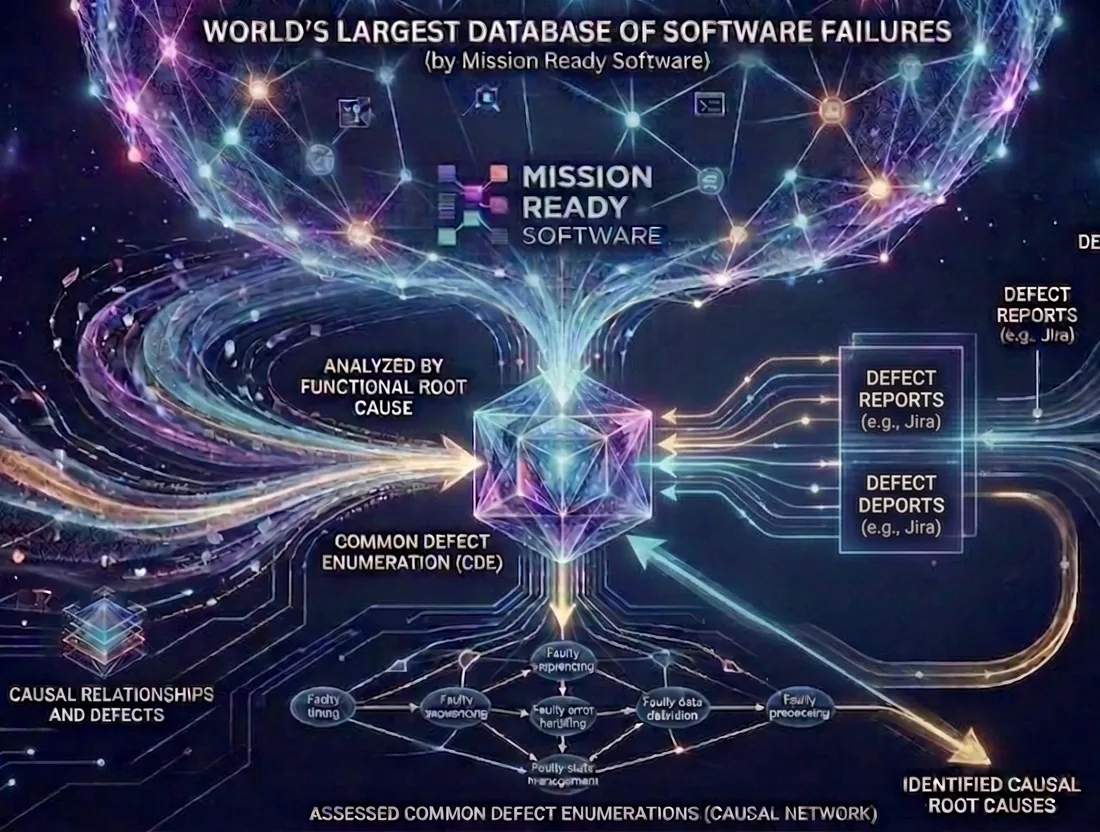
The world's largest database of software failures, analyzed by functional root cause: defect reports flow in, get assessed against the Common Defect Enumeration's causal network, and come out the other side as identified causal root causes.
The 6D CDE — six-dimensional model
The 6D CDE model — software doesn't fail in a silo, so failure modes are examined across six dimensions: the electronics, the system, the user, the mission, and the environment, alongside the software itself.
A defect that only makes sense as a software-electronics interaction, or a software-environment interaction, is invisible to a code-only review. The 6D model is what makes it visible.
Design and test recommendations for each edge case
For each common edge case covered, the specific design controls and test cases that catch it — not just the failure mode itself, but what to actually do about it.
Recognizing a failure mode is only useful if it changes what gets designed or tested. This module closes that loop.
Format, duration, and prerequisites
1 Day
Delivered as a single day of self-guided instruction.
Virtual, Self-Guided
Work through the material on your own schedule, at your own pace.
None Required
No prior class or Requs AI product is required — this class can be taken entirely on its own.
See the edge cases your current tools are built to miss.
Register for the class, or schedule a demonstration of Requs AI Edge Case.
Top 100 Overlooked Software Edge Cases — Class Slide Deck
Preview the full class slide deck below, or download the PDF to review offline and share with your team.