Predict software failure rate, availability, and reliability
These predictions tell you early whether the reliability and availability requirements can actually be met — with enough time left to pursue an alternative path if they can't.
Find out early whether the requirement can be met at all
Reliability and availability requirements are usually treated as something to verify at the end of a program — after the architecture is locked, after the budget is spent. This class teaches how to predict failure rate, availability, and reliability early enough that if the requirement can't be met, there's still time to change course.
This class directly supports the DoW Reliable Software SOW task Reliable Software Predictions, and pairs naturally with Requs AI Predict — but doesn't require owning it. It's built to be useful on its own.
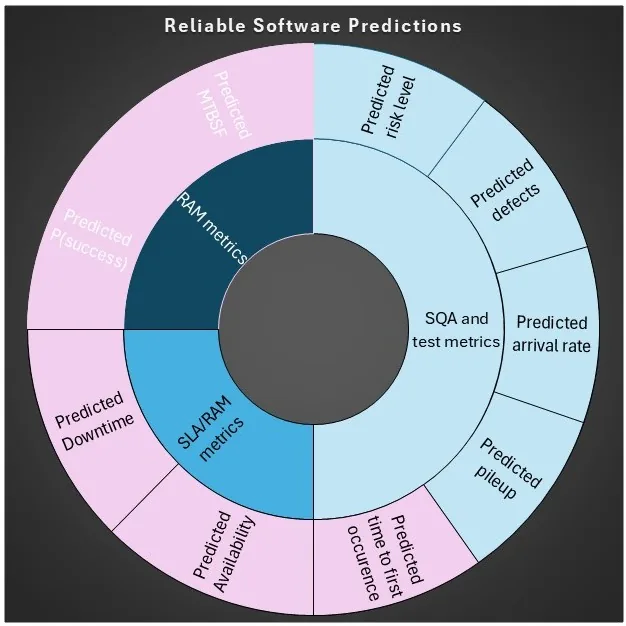
Reliable software predictions, broken down: predicted MTBSF and P(success) roll up into RAM metrics; predicted downtime and availability roll up into SLA/RAM metrics; and predicted defects, arrival rate, pileup, time to first occurrence, and risk level roll up into SQA and test metrics. This class covers how each of these predictions is actually made.
What the class covers
Three modules, covered in a single self-guided day.
How to predict software failure rate
How to predict software failure rate using the same reliability growth foundations covered in the prerequisite classes, applied specifically to a failure-rate requirement.
Failure rate is the number most reliability requirements are actually written against — get comfortable predicting it, not just reporting it after the fact.
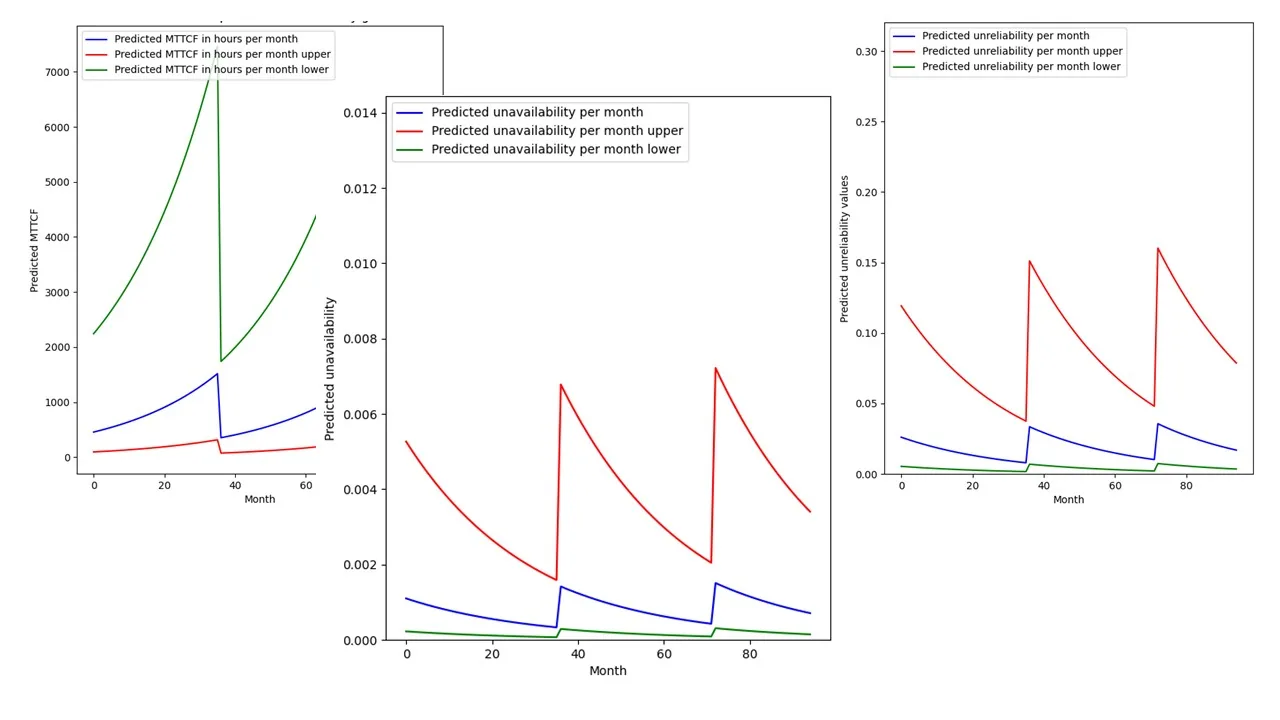
Failure rate predictions in practice: predicted MTTCF, unavailability, and unreliability trending month over month, with upper and lower bounds shown as the model updates with new data.
How to predict software availability
How to translate a predicted failure rate and repair time into a predicted availability number — before the system exists to measure it directly.
Availability requirements are usually the ones programs get surprised by late. Predicting it early removes the surprise.
How to predict software downtime
How to predict expected downtime — both frequency and duration — from the same underlying failure rate and repair data used in the earlier modules.
Downtime is what a customer actually experiences. A failure rate number alone doesn't tell you what that looks like operationally — predicted downtime does.
Format, duration, and prerequisites
1 Day
Delivered as a single day of self-guided instruction.
Virtual, Self-Guided
Work through the material on your own schedule, at your own pace.
Reliable Software 101 & Predict Software Defects
Both required before taking this class. Requs AI Predict itself is recommended but not required to own.
Find out whether the reliability requirement is achievable — before it's too late to change course.
Register for the class, or schedule a demonstration of Requs AI Predict.
How to Predict Software Reliability — Class Slide Deck
Preview the full class slide deck below, or download the PDF to review offline and share with your team.