Predict software defects and when they will be discovered
A 0.75-day training class on making "data-driven" instead of "guess-driven" decisions — before any code is written.
"Data-driven" versus "guess-driven" decisions, before any code is written
Most defect estimates are made after the fact — once code exists, once testing has started, once it's too late to change course cheaply. This class teaches how to predict defect density and discovery timing before a single line of code is written, so decisions about scope, testing, and release get made on data instead of a guess.
This class pairs naturally with Requs AI Predict — but doesn't require owning it. It's built to be useful on its own.
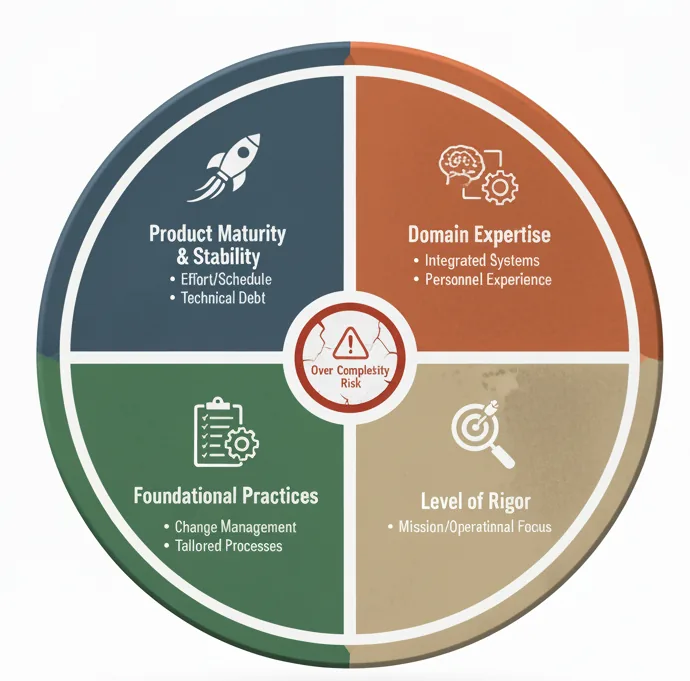
Defect prediction isn't one-size-fits-all — product maturity and stability, domain expertise, foundational practices, and required level of rigor all combine into an over-complexity risk. This class teaches how to right-size the prediction effort instead of over- or under-engineering it.
What the class covers
Four modules, covered in a single self-guided .75 day.
Predict software risks early
How to predict probability of late delivery, customer satisfaction, and reliability risk level — the same risk factors covered in Identify Software Program Risks Early, applied here.
Defect prediction builds on risk prediction — you can't reliably predict what's going to break without first knowing where the program is exposed.
Predict defect density and defect removal efficiency
How to calculate defect density by hand, and how to predict defect removal efficiency (DRE) — the percentage of defects your process will actually catch before release.
Defect density is the number every other prediction in this class is built on. Get it wrong and everything downstream is wrong too.
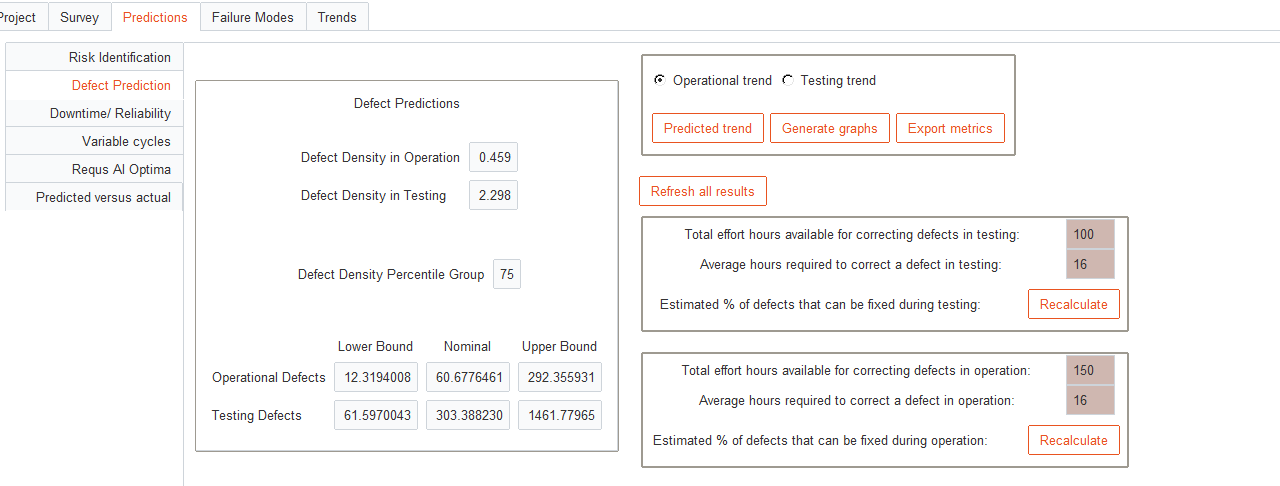
Defect density in practice: predicted defect density in operation and testing, with lower bound, nominal, and upper bound estimates for operational and testing defects — the same output this module teaches you to calculate by hand.
Predict defects and when they will be discovered (before the code is written)
How to predict not just how many defects exist, but when they're likely to be discovered — in testing, or later, in operation — before a single line of code exists.
A defect found in testing costs a fraction of the same defect found in operation. Knowing the likely timing changes how much testing effort is worth budgeting.
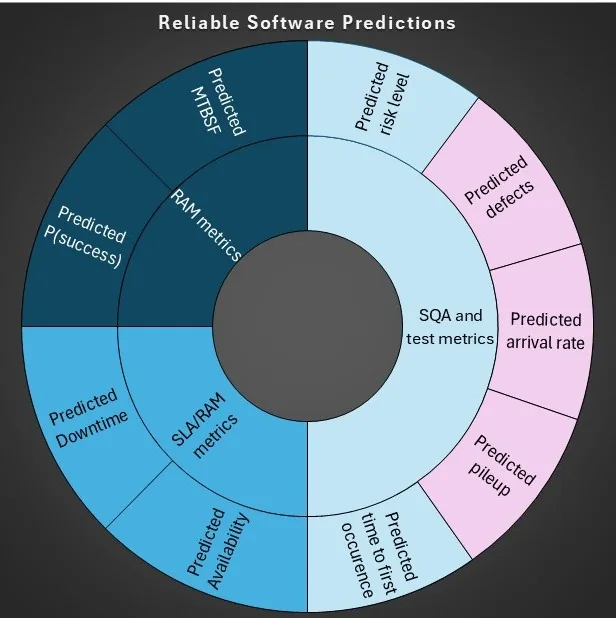
Discovery timing predictions, broken down: predicted defects, arrival rate, pileup, and time to first occurrence all roll up into SQA and test metrics — the same breakdown this module teaches you to predict before code is written.
How to navigate IEEE 1633 clause 5.3.2
A walkthrough of IEEE 1633 clause 5.3.2 — what it actually requires for software defect prediction, and how to demonstrate compliance with it.
Knowing the clause by number isn't the same as knowing how to satisfy it. This module closes that gap.
Format, duration, and prerequisites
.75 Day
Delivered as a single, condensed day of self-guided instruction.
Virtual, Self-Guided
Work through the material on your own schedule, at your own pace.
Identify Software Program Risks Early
Required before taking this class. Requs AI Predict itself is recommended but not required to own.
Stop guessing which defects will show up, and when.
Register for the class, or schedule a demonstration of Requs AI Predict.
Predicting Software Defects & Technical Debt — Class Slide Deck
Preview the full class slide deck below, or download the PDF to review offline and share with your team.